Human Factors and Ergonomics for Design

Author name: palswati27@gmail.com

UI/UX

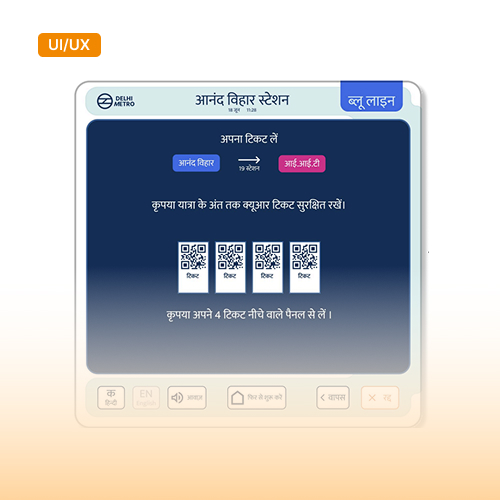
Promoting self efficacy in ticketing and navigation for people with low technological affinity in Delhi Metro

The study explores interventions in Delhi Metro ticketing for digitally less-affluent users by focusing on ATVMs as the primary point of design intervention. Through iterative prototyping and usability testing, alternative user flows such as numeric-code destination input and printed journey recall aids were developed to reduce overwhelm and improve task success.

UI/UX

Redesigning SBI Yono App: Interactive guidance for people with less confidence in m-banking

This project redesigns banking tasks in SBI’s YONO app to support users uncomfortable with mobile banking, enabling independent task completion and informed decision-making. Through iterative design with audio and visual aids, complex flows like onboarding, transfers, and deposits were simplified, improving confidence and usability for first-time users.

Healthcare

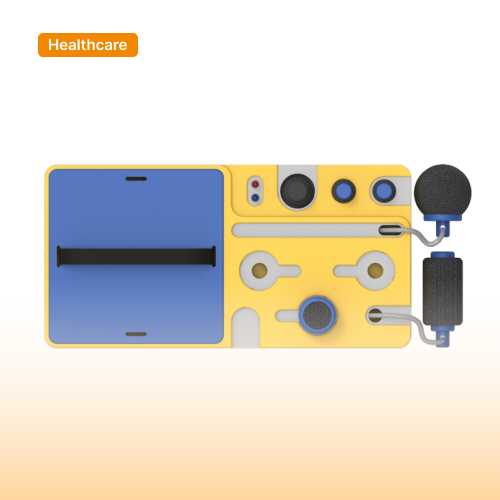
Designing Activity Based Exergames for Motor Skill Enhancement For Children with Cerebral Palsy

‘Pico’, a plug-and-play device named for “pixel” (pi) and “companion” (co),which controls four exergames through actions based on traditional physiotherapy exercises. These games, customizable to individual needs and designed to make rehabilitation more enjoyable, motivating, and effective, were tested with children with CP under supervision and were evaluated by experts.

Healthcare

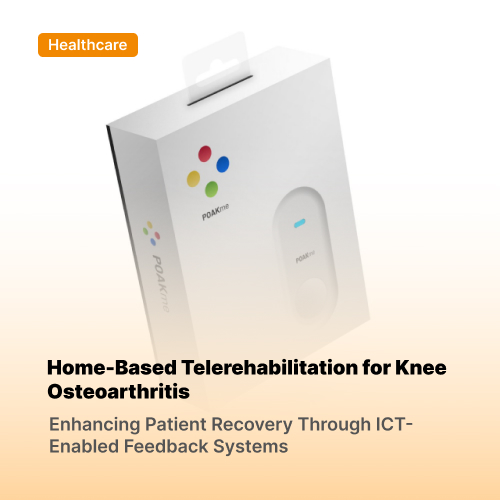
Home Based Telerehabilitation For Patients with Osteoarthritis of the Knee through ICT Feedback

Low-cost wearable physiotherapy aid that integrates an accelerometer and gyroscope to sense movement when paired with an app, provides real-time feedback, and tracks progress. By offering a home-based rehabilitation solution, it supports correct exercise practice while motivating patients through visible improvements in pain reduction and mobility.

Scroll to Top